Telegram Advertising Bot: How It Works and What It Costs
What a Telegram advertising bot really does, how it posts your ad, what posts cost on PAYchat, and when it's not the right fit.
By Aaron, PAYchat founder · PAYchat team · Updated
So you want your ad in front of Telegram users, and you're hoping a bot can do the boring part for you. I get it. Messaging channel owners one by one gets old fast.
Here's the catch, though. "Telegram advertising bot" can mean a few very different tools, and only some of them are worth your money. So let's sort them out first, and then I'll show you how the good ones work and what they cost.
What is a Telegram advertising bot, really?
A bot on Telegram is just an account run by software instead of a person. And there's one rule from Telegram's own bot documentation that clears up a lot: bots can't start a chat with someone. A person has to message the bot or add it first.
Keep that rule in mind, because it explains why the four tools people call an "advertising bot" behave so differently:
| Type of bot | What it does | Who posts the ad | Fits you if |
|---|---|---|---|
| Ad marketplace bot or Mini App | Lists channels, takes payment, publishes your ad | The bot, as a channel admin | You're buying posts in other people's channels |
| Posting / scheduling bot | Schedules posts in a channel you run | You, through the bot | You're promoting inside your own channel |
| Telegram's official Ad Platform | Shows sponsored messages Telegram serves itself | Telegram | You want Telegram-run placements, not single posts |
| Mass-DM tools | Messages many strangers at once | Usually regular user accounts, not bots | Not recommended (spam rules) |
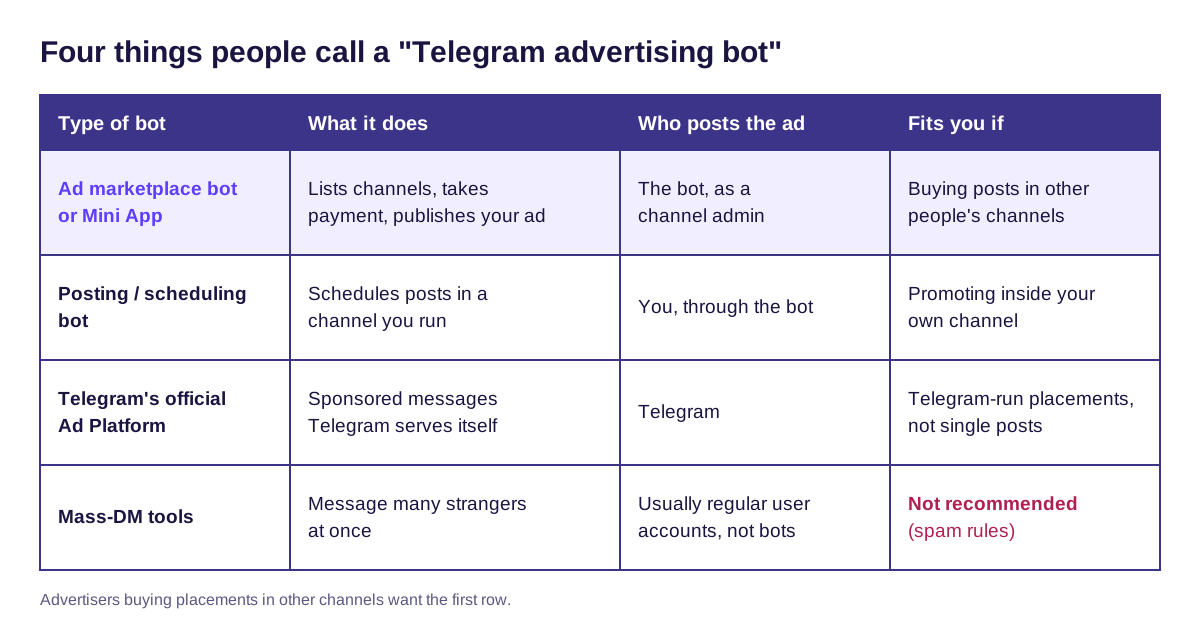
If you're an advertiser buying spots in other channels, you want the first row. That's where PAYchat fits. It's a Telegram Mini App (a small app that opens right inside Telegram) where you buy ad posts in channels.
But that raises the obvious question: how does a bot post in a channel it doesn't own?
How does a bot get your ad into someone else's channel?
Most guides skip this part, and it's the part that matters. A bot can't post in a channel just because you paid it. The channel owner has to add the bot as an admin and give it permission to post messages.
Once that's done, the bot publishes your ad at the agreed time, exactly the way you wrote it. No sending screenshots back and forth. No "I'll post it tonight, promise."
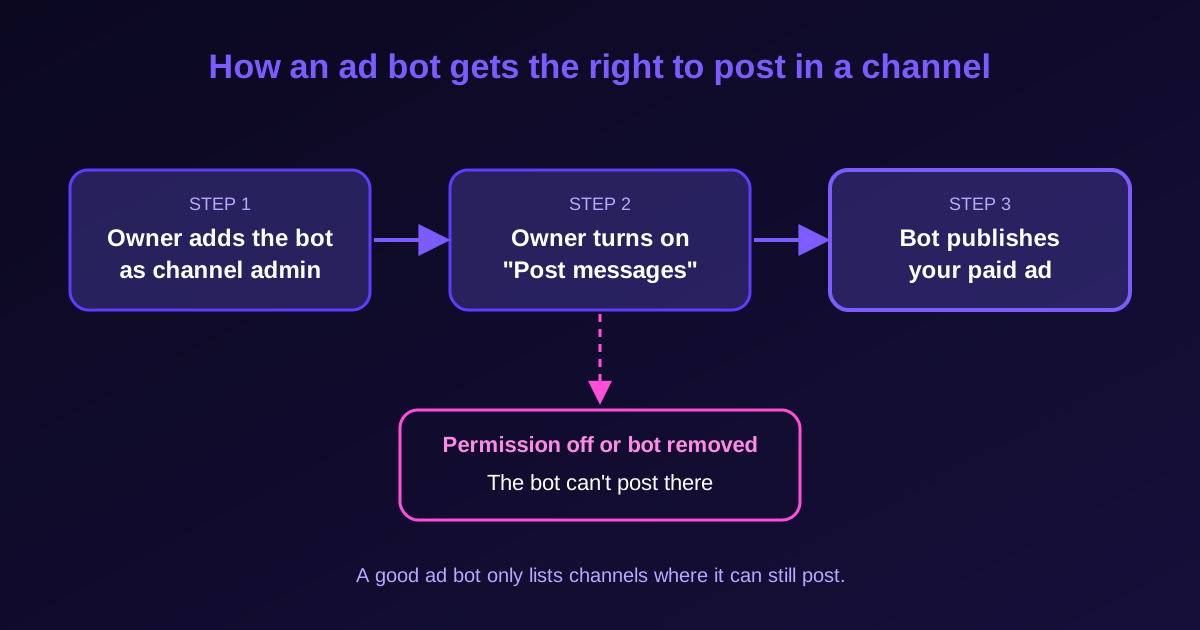
It works the other way too. If an owner removes the bot or turns off its posting right, the bot can't publish there anymore. That's why a good ad bot only lists channels where it can still post.
So the mechanics are simple. The real question is why you'd go through a bot at all instead of just messaging the owner yourself.
Why buy through a bot instead of messaging channel owners?
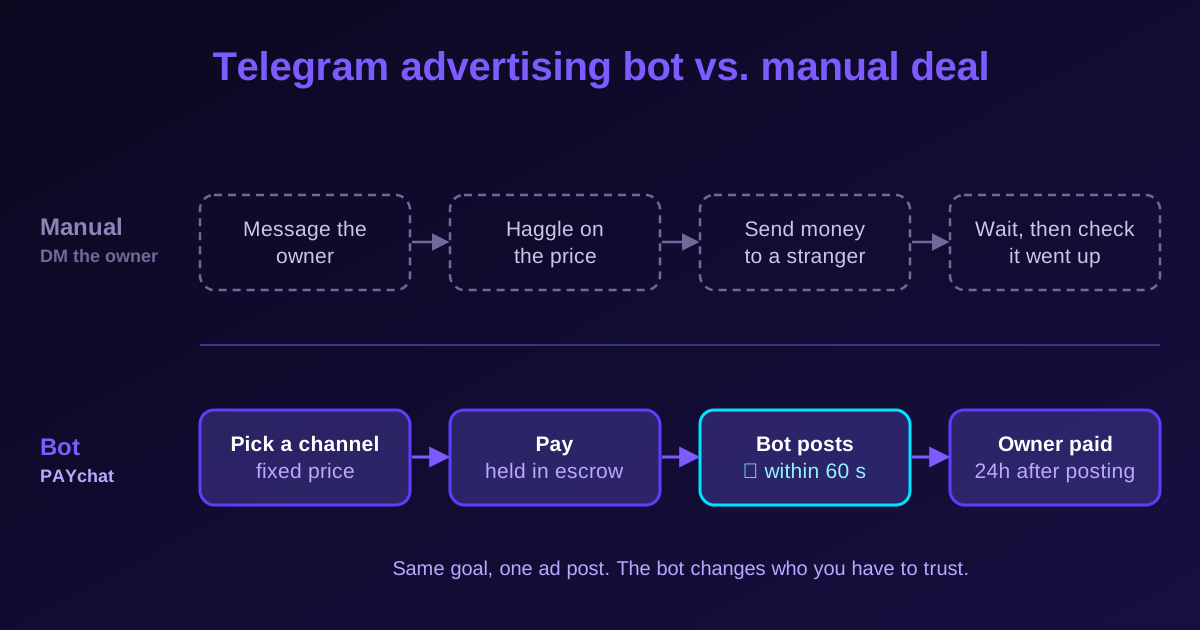
You can absolutely buy ads by DMing owners. Plenty of people do. The problem is everything around the deal: haggling, sending money to a stranger first, then waiting and checking whether your post actually went up.
A bot changes who you have to trust. On PAYchat, your payment sits in escrow, which just means the platform holds it, not the owner. The channel gets paid 24 hours after your ad is posted. And on channels marked ⚡, your ad goes live within 60 seconds of payment, because the bot posts right away instead of waiting for someone to wake up.
The other big win is scale. Right now you can buy from 7,863 channels on PAYchat, all from one list instead of 7,863 separate chats. If you want the step-by-step buying flow, I walked through it in how to run Telegram channel ads.
Of course, convenience only matters if the price makes sense. So let's talk money.
What does an ad bought through a bot cost?
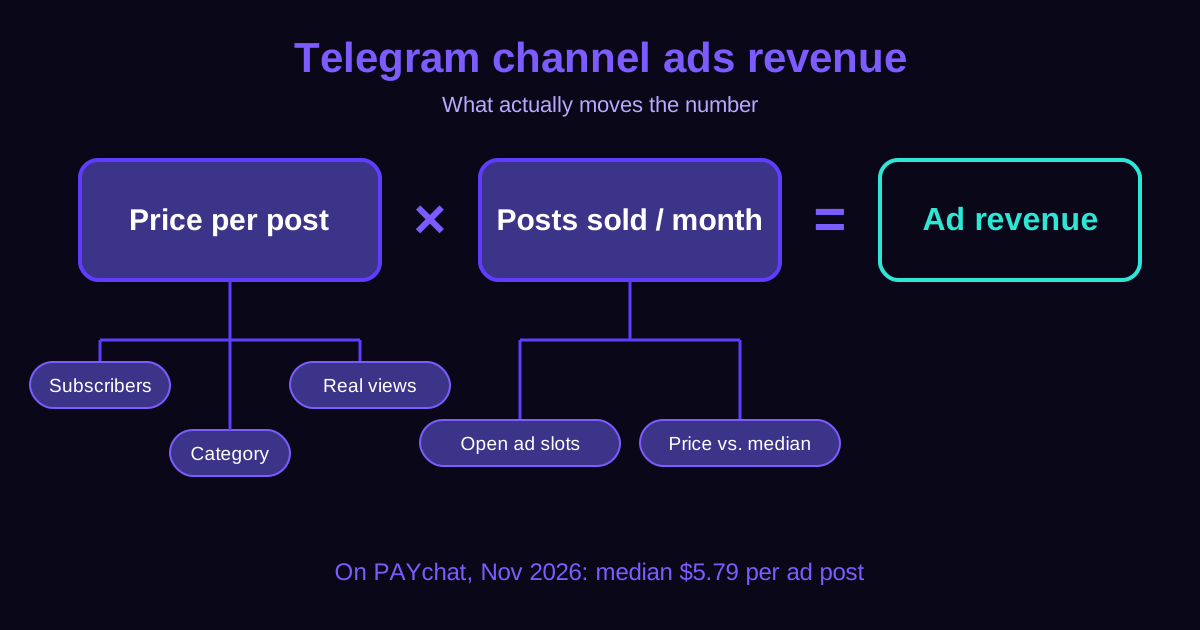
On PAYchat, every channel sets a fixed price per post. You pay that price and nothing on top, because the advertiser fee is 0%. You can start from 1 USDT, so you can test one cheap channel before you put real budget in.
So what's a normal price? On PAYchat, as of Nov 2026, the median price of one ad post is $5.79. The median price per 1,000 subscribers is $0.99.
That second number is the one I'd actually use. You might've seen CPM, short for cost per mille. It just means what you pay to reach 1,000 people. Here I'm using subscribers as a rough stand-in for that.
Here's how it plays out. Say a channel has 20,000 subscribers. At the $0.99 median, that's about $19.80 per post. If the owner asks $40, you're paying roughly double the typical rate.
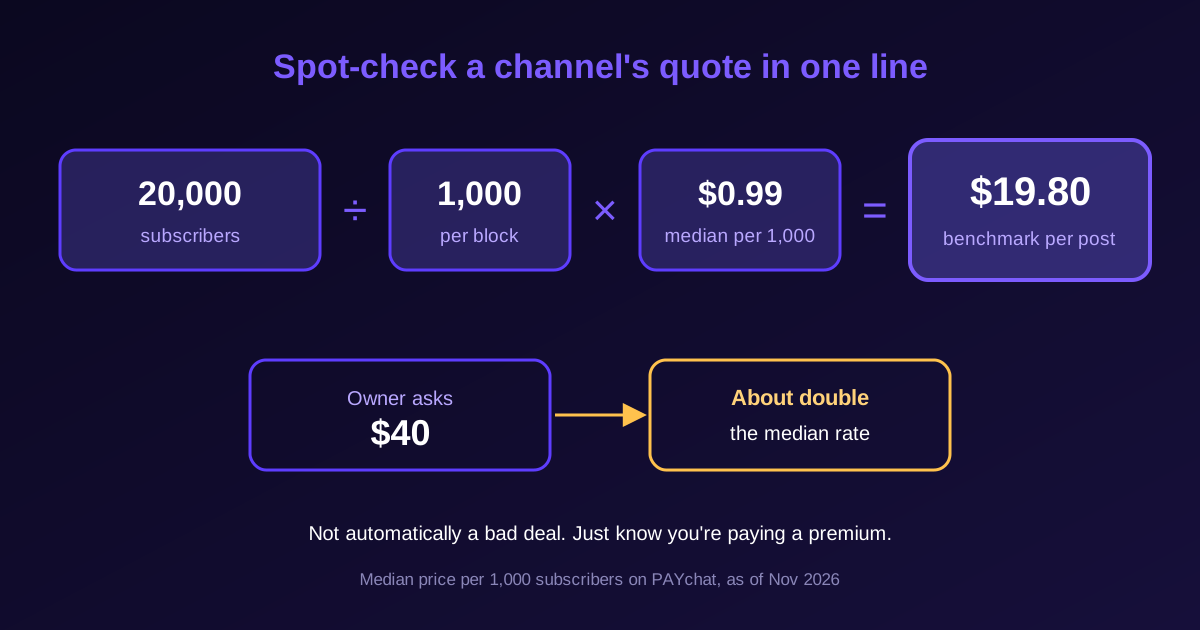
Does that make it a bad deal? Not automatically. That audience might be exactly your buyers. You just want to know you're paying a premium before you pay it. And if you'd rather start with channels that already rank well, the top channels page is a faster way in than scrolling the whole list.
Still, a fair price doesn't mean every ad will work. That's where you need to be honest with yourself.
What should you watch out for?
A bot makes buying easier. It doesn't make every ad a winner. Here are the limits I'd want to know before spending.
A fixed price buys a post, not results. You pay per post, not per click. If a channel's readers don't care about your offer, no bot can fix that. Use your own tracked link so you can see what each channel actually sends you.
Not every channel is ⚡. Only those channels post right after payment. On the rest, the timing depends on the owner.
You'll need USDT. That's the only way to pay here. If you don't hold any and don't want to, this route isn't for you.
Mass-DM "bots" are a different thing entirely. Remember that rule from the start: official bots can't message people first. So tools that promise to blast thousands of strangers usually run on regular accounts. Telegram's Terms of Service prohibit using the service to send spam, so that's a risk to your account, not a shortcut.
Want Telegram's own sponsored messages instead? That's the official ad platform, and it works differently from buying single posts. I broke down the difference in official platform vs channel posts.
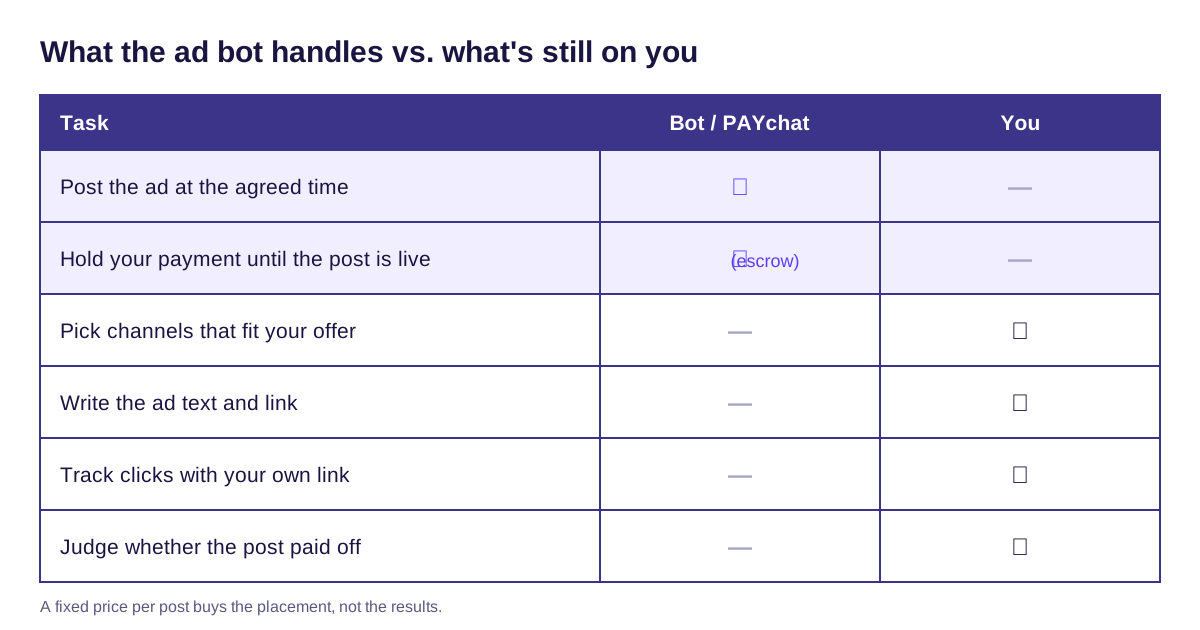
That last table is really the whole thing in one picture. The bot posts on time and holds your money until the post is live. Picking the right channels, writing the ad, and judging the results are still your job.
PAYchat numbers in this guide come from PAYchat's own listing data as of Nov 20, 2026. Telegram rules are linked to official Telegram pages.
All guides and comparisons18 guides · 4 comparisons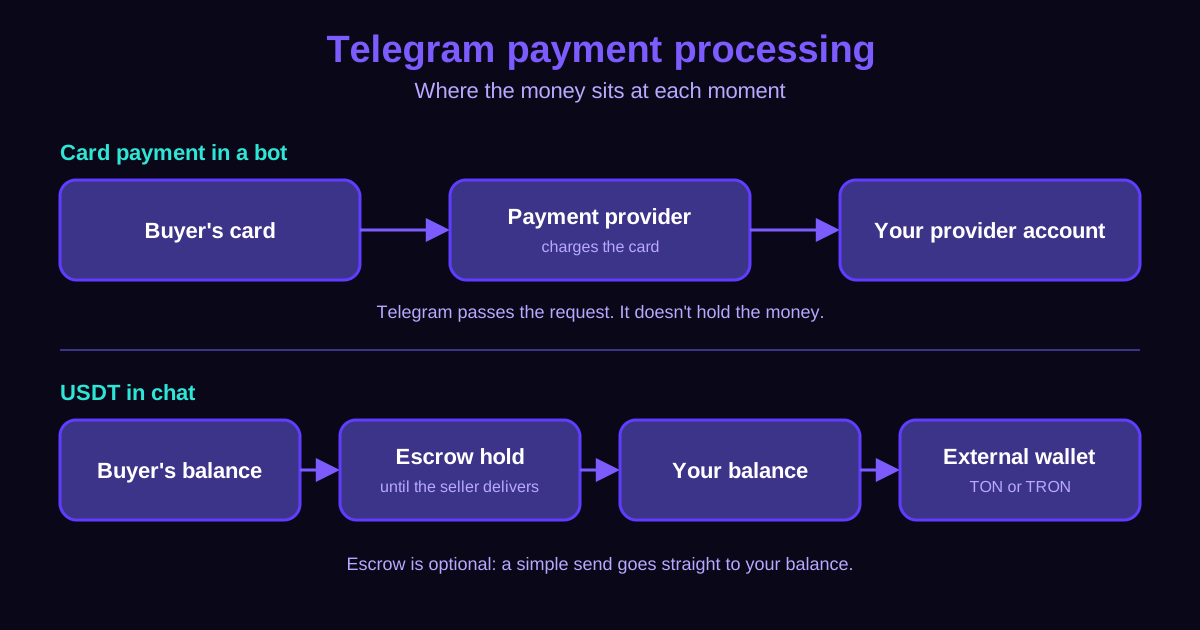
Telegram channel ads


